An interview with the author of ‘This Is Where the Serpent Lives’.
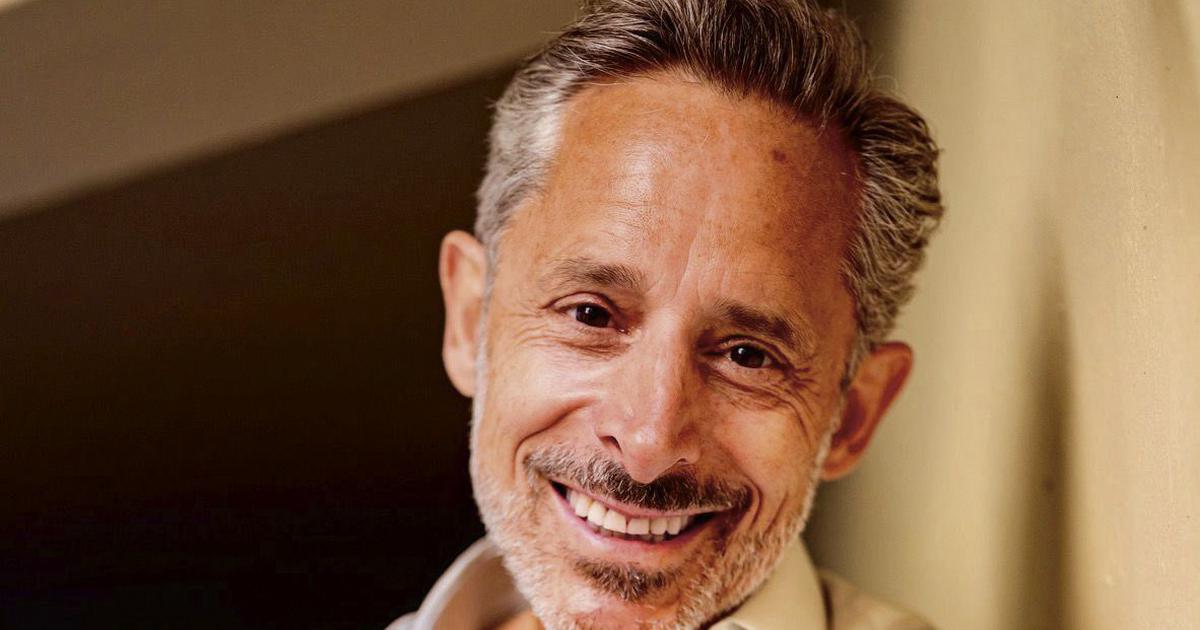
Share Share on Facebook Share on X Share on LinkedIn Share on BlueSky Share on Threads Share on Reddit Copy Link Email Print Add Scroll on Google iOS App Android App Author Daniyal Mueenuddin. | Chris Blonk The epigraph of Daniyal Mueenuddin’s first book, the multi-award-winning short story collection, In Other Rooms, Other Wonders , is a Punjabi proverb: “Three things for which we kill – land, women and gold.” After 17 years, Mueenuddin has poised himself yet again, bringing similar stories, driven by the proverbial motivations of the feudal systems from the mofussil farms in South Punjab in Pakistan, a heady cocktail of izzat, mulazims, and the mulk itself in This Is Where the Serpent Lives . The rich tapestry of the goings-on in the farms – managed by munshis, and overlooked by the mian-sahibs – is divided into four sections. Each one reads like a novella. Their interconnectedness isn’t, however, a mere coincidence. It’s woven into the fabric and themes of the stories Mueenuddin chooses to centralise. In the sense that respectability, repeatability and novelty are part and parcel of the very everyday life in the subcontinent. While the section “The Golden Boy” focuses on an orphaned, enterprising boy’s rise to become a chauffeur in an influential family, the Atars, in “Muscle,” we meet the US-returned Rustom, who must come to terms with the idiosyncrasies of running a farm, of which he knows nothing, as he grieves his parents and his much-feared land-owning grandfather. Heavily controlled by his munshis, in the absence of their maliks, the Abdalahs, the situation of the farm is concerning as the Chandios community continues to steal telephone wires, irritating Rustom. But dealing with his manager at the Dunyapur estate, Chaudrey Zawar Hussein, and one Sheikh Sharif doesn’t prove helpful either. Towards the end of this section, one meets the Atars, chiefly Hisham and his wife, Shahnaz. There’s an interesting love triangle in the section that follows, “The Clean Release.” One also meets the orphaned boy, Bayazid (aka Yazid), a consciously constructed mirror-image of Saqib, whose story is deftly presented in the titular section. The richness of Mueenuddin’s prose, the attention to detail to his characters and the variety of sexual tensions at play make the 17-year wait worthwhile. Mueenuddin spoke to Scroll about how men in Pakistan wear power as a costume, why farming in Wisconsin is different from farming in Pakistan’s South Punjab, and why, in his fictional duniya, characters seem to chart their own trajectory in collusion with him. Over the years, you were writing a different book by the same name, but it had nothing to do with Pakistan, as you’ve noted in the interviews. What changed and why did the title remain unchanged? My first book, In Other Rooms, Other Wonders , was published in 2009, and soon after the book came out, my mother died, under tragic circumstances. In response to her death, I set out to write a book about her, set in America – she was American. I worked on that book for the next ten years, writing it short and then long and then short again, cutting and changing the perspective and making many other changes, seeking to write it in a way that would do honour to her and resolve my complex feelings about her life and death. However, even after all those years, I found that I could not complete the book, couldn’t end up with a book that I wished to publish. Finally, in Covid times, more than ten years after I began, I put it aside and turned to the stories that appear in this new book. As the unpublished book talked about death, betrayal and other dark subjects, the title served it well. There was this dark force circling it, the one that brought my mother to her death. When I started writing this book, which I knew would take masculine power as its theme, I realised that the title fit equally well with this one, too, though it had a very different valence when applied to these stories. And so I recycled the title, giving myself the satisfaction of preserving the title of the unpublished book, a form of continuity in my work. This Is Where the Serpent Lives is the first line of Wallace Stevens’ poem, “ The Auroras of Autumn ”. I’m a devoted fan of Stevens’ poetry, and I’ve always thought that, if you’re sniffing around for compelling titles, a good place to start is in a collection of his poems. There are so many lines of his that would serve as a title. Titles – like covers – are so very important. They say, Don’t judge a book by the cover – by the cover image and the title, but in fact, we do just that. We’re all superficial in this way. My first book had an image by the great Lahore artist Shahzia Sikander on its cover. This new book reproduces a painting by the equally great Salman Toor, who was brought up among the types of characters that appear in the stories. Lahore has managed to produce two (and more) superb fine artists in the past decades, and I am fortunate enough to have their work adorning my books. ‘This Is Where the Serpent Lives’: Daniyal Mueenuddin’s first book in 17 years is thrillingly alive This novel appears like an interconnected collection of stories. Did you decide to call it a novel or something else? My publisher and I and others went back and forth on the question of what to call this hybrid collection. My publisher was more inclined to call it a novel, not least as a business matter. Some of my friends thought it would be better to call it a collection of stories, fearing that otherwise there would be sniping from critics. We ended up somewhere in the middle, and in fact , the publicity materials left the matter undecided and elided the question. Somewhat to my surprise, critics and readers have mostly called it a novel. When I began the project, I started with the first novella or story or section, call it what you like: “The Golden Boy”, with which the book opens. As I worked on that, and as I started designing the book, I fixed upon my theme, which would tie the book together, and which would be considered in each section – masculine power in Pakistan; hierarchy and status and the greasy pole which in Pakistan is so much greasier and harder to climb than in other places, say, in Norway, where I presently live, and in the US, the land of opportunity, as it once somewhat-legitimately was known. From that point on, the book continued to find its shape, like a novel in some respects, like a book of connected stories in another. Books do this – like children, whom we guide and shape and tutor and admonish, yet they find their own character; we raise them, and then they raise themselves. As writers, we command our subjects, but also are at their command. The story goes where it will, where it must. There’s a wonderful story about Tolstoy. It may be in his journals – or perhaps I’ve made it up! In any case, he was deep into Anna Karenina and had reached the point at which Vronsky is confronted by Anna’s husband. Poor Vronsky went shambling home, feeling terrible about himself. Suddenly, utterly to the author’s surprise, he picked up a pistol and shot himself in the chest. Tolstoy was horrified that this poor wretch had done this; it was quite unexpected. So it is. If the characters have been built in the round and thought-through deeply enough, sometimes the writer finds that they take on lives of their own, and so the book too takes on its own life. It goes where it must. So, coming back to what I was saying, “The Golden Boy” took the form it did, and the other stories fit together with it in a complicated, refracted way. In retrospect, the form seemed to make sense. I came to accept that to depict the incredible complexity of the Pakistani social structure and its hierarchies, you must look at it panoptically. From above and below, from side to side, and from the middle. The four parts of my book attempt to describe a ravishingly complex reality by looking at the same subject from different angles, somewhat as the cubists did with the human form. Doesn’t the complexity of what you’re trying to describe make your work only partial and incomplete? How do you capture all the nuance, particularly when writing in English about characters who speak Urdu and Punjabi? How do you write about this place that is so alien to your readers in the West and yet so familiar to those in the subcontinent? It’s a real problem. My characters speak in Urdu and Punjabi, yet I’m writing them in English, so, of course, that’s problematic and has its own challenges. And then, it takes such a deft hand to describe the place in a way that will be sufficient for a western reader but not over-inscribed for one closer home. After the book came out, one of my MFA professors wrote me a letter, saying she’d enjoyed the book, and then drawing my attention to parts of it that had puzzled her. Among other things, she commented on a scene in which Shahnaz calls Saqib into her presence and directs him to stand in front of her, rather than to the side. She was struck that Shahnaz didn’t, however, ask him to sit down, and thought that this indicated an intentional rudeness on the mistress’s part. As I wrote to her, in fact, Shahnaz was being polite by asking the boy to stand in front of her, rather than to the side, as a servant ordinarily would. This already was a concession, an acknowledgement that she took his request for help seriously. It wouldn’t occur to Saqib, or to Shahnaz, that he should sit down with her. It’s a minor example, but it illustrates how difficult it is to convey the nuance to a westerner, even one as widely read and cosmopolitan as my MFA professor. In this sense, I’m a translator between cultures, but one who must address himself both to native speakers and to those entirely unfamiliar with the language – the setting – of the book. I mustn’t bore a reader like you by overly elaborating my descriptions, and yet I must put in enough so that a reader like my professor can understand my point. In the face of events, the seemingly powerful men in your novel are vulnerable, too. They draw their power from the sheer inescapability of those who work for them. Your thoughts? That’s right. To share my father’s example. He was born in 1906, and he was one of the early members of the Indian Civil Services, so a very old school person. I remember watching him getting dressed by this man, his valet. My father would stand and have this sort of childlike expression as his valet put his clothes on him. I mean, here’s a powerful man who, in that moment, was very childish. You see this most explicitly in the dynamic between men and women in Pakistan. When men are back home after fighting with the world or whatever they’re doing, they become these little boys, belligerent like that, sulky like that, spoiled like that, raging like that, needy like that. So, power is something that they put on and take off. With women, it’s different but with men in Pakistan, power is their uniform. Power is very much about the apparatus, an apparatus that very subtly disempowers them in their secret relations with themselves. Take the chaprasis away and the government servant with his big ego and his big desk would feel very naked indeed. In my view, Bayazid and Saqib are mirror images of each other from a different time frame, though a crucial difference between the two is that only the latter has a family. Would you agree? That was quite consciously done. It occurred to me when I was writing the Saqib story that these two super-smart, charismatic guys who are trying to get somewhere in life are different reflections of the same identity. The difference is that, within the confines of the book, Yazid achieves his goals, to be comfortable and respected and to have power, although he has it only through his relationship with the Atars. Saqib, however, is seen in the book only in the early part of his ascent. At the end of the book, he suffers a harsh check on his rise, but that is not certainly the end of him. I’m quite certain that he will go on finally – past the ending of the book – to become successful according to his own definition of that. He will go on to achieve a great deal, because he has all the information, the knowledge that he has gained working with Hisham and Shahnaz. It’s a priceless education, a very smart man observing the Atars closely and rewiring himself for success. Perhaps because in South Asia, upbringing is largely gender-specific, I could see homoerotic tensions in the seemingly homo-social scenarios. Could you share more about the innate sexual-ness evident in select sections? Yes, I agree. There is a sexual component to the way men interact in Pakistan that is quite different from what I’ve observed in the US. There is so much sexual innuendo in the interactions of men in Pakistan. I was exposed to this in my village as a boy, playing hide-and-seek and so on, and was shocked to discover that when they hid together in the darkness, they got up to all sorts of petting and rubbing. It was quite accepted – hidden, but assumed – that the boys were attached to each other in this way. It makes sense – their hormones were raging, they were developing into sexual beings, but they had no access to girls. I didn’t notice this so much in a boarding school in America that I attended, but it was the same in England when I was there for a year at what the English call a “Public School”. So many of the boys had crushes on each other and played out their little sexual dramas. The English public schools have been known for the sexual relations among the boys for several centuries, just as in the villages of South Punjab. Given you’re closer to Rustom in terms of being a foreigner in your own land when you had to come back to Pakistan, tending your farm. How much of your experiences inform this character and what in your experiences tending to the farms that you’d say was revelatory to you? In its external aspects, Rustom’s experience when he returns to take charge of his farm is quite similar to mine. My father was 30 years older than my mother, so he was an old man by the time I returned from college in the US to take charge of the property that he had given to my brother and me. He lived in Lahore, and the munshis at our farm, 13 hours distant, had essentially declared independence. One of them had even become a member of parliament. When I showed up, these munshis were, of course, determined to do whatever they could to drive me away. As a result, my first few years at the farm were very tense. But, fortunately for me, my father lived for three more years after my return. He had been in government all his life in senior positions, so the munshis knew if they pushed me too far, I could get my father to make a phone call. That’s how I managed to survive those first few years. But my dilemma was that I couldn’t get rid of these munshis. They were very powerful in the area, so nobody else would come to take their place if I fired them. So, we all pretended to be chummy and to be working together; meanwhile, I smote their heads in various ways, and they smote my heels. I was in my early twenties with a great enthusiasm for exercise. I would take the whole entourage on four- or five-hour walks every morning, all over the farm, and they’d be huffing and puffing and groaning while I would walk briskly as I could. Since I had no real power, I inflicted these little cuts on them and wore down their resolve and their spirit. Getting back to Rustom, the main difference between Rustom and me is that he lacks imagination. We come to see later that he is a very conventional guy. He returns to his land with all sorts of ideals and intentions, but he slots back into the system pretty easily. I wasn’t like that, for I knew that wasn’t going to be my path, living in Lahore and managing my property in a desultory way. My father had – very generously – allowed that if I wished to remain in the US and pursue a life there, he would support me however he could. However, my dream then – as is my dream now – was to write well and to make a life with books and words. Returning to live on this extremely remote farm, surrounded by my mother’s wonderful library, seemed to me the best way of pursuing this goal. I’ve now been doing it for 40 years and more, both farming and writing, and the two have been wonderfully and effectively braided in my life. The farming enables my writing, and my writing enables my farming. If I had been like Rustom, my life would have unfolded very differently. I suppose, later in life, Rustom may go into politics or more energetically into business – or perhaps he’ll just become a duffer living in Lahore and complaining about how Pakistan is no longer what it used to be – and playing bridge or, if he manages to run his farm well and to make money, then going abroad every summer and developing some hobby or some hobby-horse. Certainly, there are incidents from my first years at the farm that I’ve loaned to young Rustom. For example, when I returned to the farm in 1987, we had one of the few telephones in the area. I remember our number was 27, and I spent a great deal of time telephoning all sorts of people in Lahore, particularly my father, and pouring out my woes and seeking company that way. There was this clan living near my farm – I won’t name them – and these people were running all the black enterprises in the area, booze and hash and opium and all that. Probably, at the instigation of my munshis, who had observed my reliance upon the telephone, these guys would constantly steal the valuable copper wire from the telephone, which ran for many kilometres to the farm, just a single wire on poles, running across the landscape and into my little dera . It was terribly frustrating! So, when I was writing the story of Rustom, I included this detail, of the stolen phone wires. Shahnaz harbours these multiple personalities when she has to negotiate with different people in the face of events. Please tell us about constructing this character. I’m very fond of Shahnaz, and I sometimes wish that I’d used her more extensively in the book. It’s a complicated matter, when writing, to decide how much emphasis to put on each character. Yazid is very much based on an actual person. And even Saqib is modelled on people I’ve known. Shahnaz is, however, very much sui generis . I like her and enjoy her company: she’s thoughtful and complex and surprising and enterprising and brave. One of the pleasures of writing is that one creates these characters and then spends lots of time with them, writing their stories. In Shahnaz’s last scene, by the swimming pool, she’s given an important role in the book, for she is the one who delivers the final word regarding Saqib’s transgression. She’s angry and she rises up and delivers her verdict – and she is the one who offers the blessing, the forgiveness. And then of course, it’s too late, Saqib has already been punished by the police. She’s a lot smarter – more clever, more thoughtful – than Hisham, her husband. She understands Pakistan better than he does, even though she wasn’t brought up there. I think partly that’s because she’s not really a Pakistani. Like me, she’s done all her schooling abroad. Therefore, when she comes back, she’s more like a foreigner than a local – a hybrid, brought up around all things Pakistani, but also brought up with other identities and perspectives. Having been brought up abroad, she doesn’t take anything for granted. She doesn’t assume anything. She gathers information and analyses it: Who are these guys and how do they behave and why do they behave the way they behave? Whereas Hisham doesn’t make those evaluations, because he proceeds according to his intuitive understanding. Of all the novels I’ve read on the 1970s political turmoil in Pakistan, only one by Sadia Abbas stands out, The Empty Room , with a woman’s perspective. Given that there was Benazir Bhutto as well, I’m wondering why there haven’t been enough inventive works on whether the power could be in the hands of women, for example. Benazir Bhutto was an honorary man. She didn’t exercise her power as a woman. She was basically a stand-in for her father. The way she projected was not at all as a female. It’s more complex than that, of course. She used her female powers, her female identity, as one of her instruments – she could be flirtatious or coy. But generally, she belonged very firmly to the men’s club and played by the club’s rules. Historically, it has been the same in the West. It’s only in the last 30 or 40 years that in the west we’re starting to experience women exercising power in ways that aren’t masculine. It’s a developing theme in human history, and one that I hope will become ever more prevalent. Women exercise power differently than men do, and they are increasingly able to do it in the largest public spheres. A world run by women would be – in my view – a much better place. I’m curious about the third-person omniscient narration never breaking except on one occasion, where one sees an “I”. Yes, there’s one place in the book where I use the first person singular, just in one sentence. Several readers have pointed that out. I was writing one morning and feeling a little exuberant and it occurred to me that just for a brief moment, I could lower the veil of the third-person narrative and poke my nose into the drama. So, I used the “I”. Let’s hope that it’s not too confusing to the reader. I thought of it in the same way as sometimes in paintings the artist will give his own features to one of the minor figures, somewhere at the edge of the canvas. As you also own a farm in Wisconsin, could you share where you enjoy farming and writing the most, and why? Yes, my mother came from good American prairie stock in the Midwest , from farmers in the dairy country of Wisconsin. When she died, she left me her land there. I like to go there and work on the farm; work physically, building fences and managing the woods and so on. But I don’t write when I’m there – it’s a different mood. On the other hand, the farm in Pakistan is very much a place for writing. I’m isolated there, so there are no distractions. And over a lifetime, I’ve developed good writing routines there; getting up early and going to my desk, and then in the afternoon dealing with business. Writing is a matter of setting routines – do a little bit every day, a few hundred words, and gradually the stories take shape and come to life.