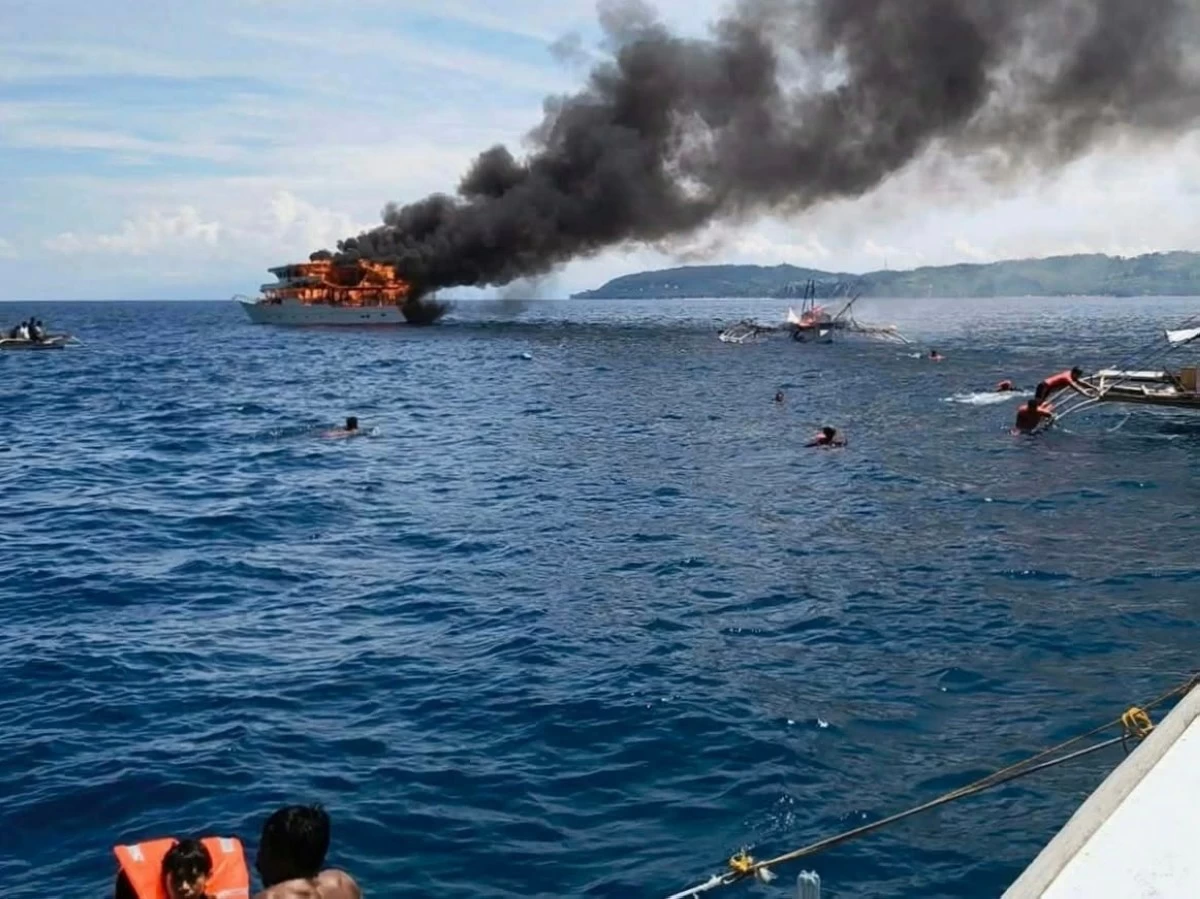
A yacht transporting vital relief supplies to earthquake victims caught fire off the coast of Glan, Sarangani, adding a fresh hurdle to humanitarian assistance and disaster response (HADR) efforts, even as the National Disaster Risk Reduction and Management Council (NDRRMC) confirmed on Saturday, June 13, a decrease in the validated death toll – from 55 to 46 – from the recent disaster. The Philippine Coast Guard (PCG) responded to the maritime incident in the vicinity waters of Barangay Small Margus at around 10:25 a.m. on Friday, June 12. Initial investigation revealed that the distressed vessel was underway to Glan to deliver aid when the fire broke out. PCG spokesperson Commodore Noemie Cayabyab confirmed that all crew members and passengers were safely rescued by responding PCG personnel and nearby fishermen. The survivors were immediately transported to the neighboring Barangay Big Margus, with no casualties reported from the sea mishap. According to PCG, the maritime accident complicated an already massive humanitarian crisis in the region, which is currently reeling from a devastating magnitude 7.8 earthquake centered in Maasim, Sarangani. The powerful June 8 tremblor has already affected a total of 100,782 families or 479,026 persons across 399 in Zamboanga Peninsula (Region 9), Davao (Region 11), Soccsksargen (Region 12), and the Bangsamoro Autonomous Region in Muslim Mindanao (BARMM). Of those affected, there were 1,883 families or 8,246 persons currently being served inside 24 evacuation centers. A much larger demographic of 7,942 families or 32,575 persons were receiving assistance outside of evacuation centers. Amid the ongoing emergency operations, the NDRRMC adjusted its official casualty count to 46, from the previous report of 55 dead. Government records showed that 39 of these fatalities occurred in Region 12 while seven were recorded in Region 11. “The changes are due to continuous validation and verification of reports so there will really be changes in the numbers,” OCD information officer Diego Mariano said. The NDRRMC explained that initial casualty figures released after major earthquakes are often based on raw and unverified field reports. Disaster officials conduct further checks by cross-referencing death certificates, medical records, and reports from local governments and the Management of the Dead and Missing cluster. It said casualty figures may be revised downward because of duplicate entries, misclassification of deaths, unverified reports from affected communities, and cases in which missing persons are mistakenly included in initial fatality counts. The NDRRMC said it was also tracking 689 injured individuals while 38 people remain missing, with 22 disappearances reported in Region 11 and 16 in Region 12. The NDRRMC stressed that delivery of aid by sea, like the mission attempted by the ill-fated yacht, has become increasingly critical due to severe disruptions on land. The earthquake severely damaged local infrastructure, leaving 28 roads and nine bridges entirely impassable in Regions 11 and 12. Region 12 suffered the brunt of the infrastructure damage with 22 blocked roads and six damaged bridges, while Region 11 recorded six ruined roads and three destroyed bridges. A total of 40 areas remained completely without electricity due to toppled electric posts, leaving 35 areas in Region 12 and five areas in Region 11 in total darkness. Shelter remains a primary concern for disaster managers as the earthquake compromised a total of 23,402 houses across the four affected regions, leaving 17,761 structures partially damaged and 5,641 homes totally destroyed.
Yacht carrying quake relief supplies catches fire off Sarangani; NDRRMC validated death toll drops to 46
A yacht transporting vital relief supplies to earthquake victims caught fire off the coast of Glan, Sarangani, adding a fresh hurdle to humanitarian assistance and disaster response (HADR) efforts, even as the National Disaster Risk Reduction and Management Council (NDRRMC) confirmed on Saturday, June 13, a decrease in the validated death toll – from 55 to 46 – from the recent disaster. The Philippine Coast Guard (PCG) responded to the maritime incident in the vicinity waters of Barangay Small Margus at around 10:25 a.m. on Friday, June 12. Initial investigation revealed that the distressed vessel was underway to Glan to deliver aid when the fire broke out. PCG spokesperson Commodore Noemie Cayabyab confirmed that all crew members and passengers were safely rescued by responding PCG personnel and nearby fishermen. The survivors were immediately transported to the neighboring Barangay Big Margus, with no casualties reported from the sea mishap. According to PCG, the maritime accident complicated an already massive humanitarian crisis in the region, which is currently reeling from a devastating magnitude 7.8 earthquake centered in Maasim, Sarangani. The powerful June 8 tremblor has already affected a total of 100,782 families or 479,026 persons across 399 in Zamboanga Peninsula (Region 9), Davao (Region 11), Soccsksargen (Region 12), and the Bangsamoro Autonomous Region in Muslim Mindanao (BARMM). Of those affected, there were 1,883 families or 8,246 persons currently being served inside 24 evacuation centers. A much larger demographic of 7,942 families or 32,575 persons were receiving assistance outside of evacuation centers. Amid the ongoing emergency operations, the NDRRMC adjusted its official casualty count to 46, from the previous report of 55 dead. Government records showed that 39 of these fatalities occurred in Region 12 while seven were recorded in Region 11. “The changes are due to continuous validation and verification of reports so there will really be changes in the numbers,” OCD information officer Diego Mariano said. The NDRRMC explained that initial casualty figures released after major earthquakes are often based on raw and unverified field reports. Disaster officials conduct further checks by cross-referencing death certificates, medical records, and reports from local governments and the Management of the Dead and Missing cluster. It said casualty figures may be revised downward because of duplicate entries, misclassification of deaths, unverified reports from affected communities, and cases in which missing persons are mistakenly included in initial fatality counts. The NDRRMC said it was also tracking 689 injured individuals while 38 people remain missing, with 22 disappearances reported in Region 11 and 16 in Region 12. The NDRRMC stressed that delivery of aid by sea, like the mission attempted by the ill-fated yacht, has become increasingly critical due to severe disruptions on land. The earthquake severely damaged local infrastructure, leaving 28 roads and nine bridges entirely impassable in Regions 11 and 12. Region 12 suffered the brunt of the infrastructure damage with 22 blocked roads and six damaged bridges, while Region 11 recorded six ruined roads and three destroyed bridges. A total of 40 areas remained completely without electricity due to toppled electric posts, leaving 35 areas in Region 12 and five areas in Region 11 in total darkness. Shelter remains a primary concern for disaster managers as the earthquake compromised a total of 23,402 houses across the four affected regions, leaving 17,761 structures partially damaged and 5,641 homes totally destroyed.